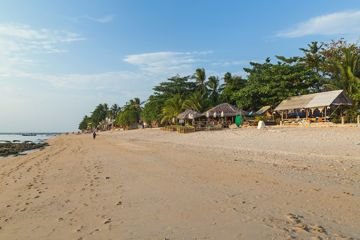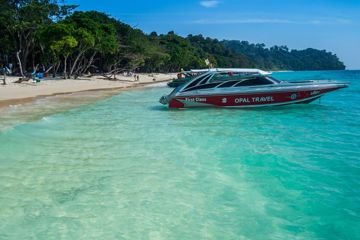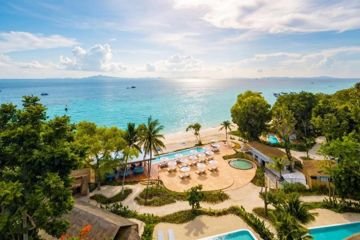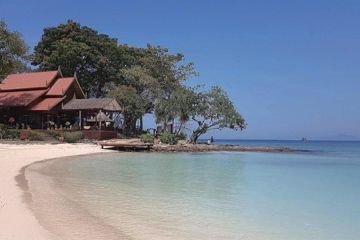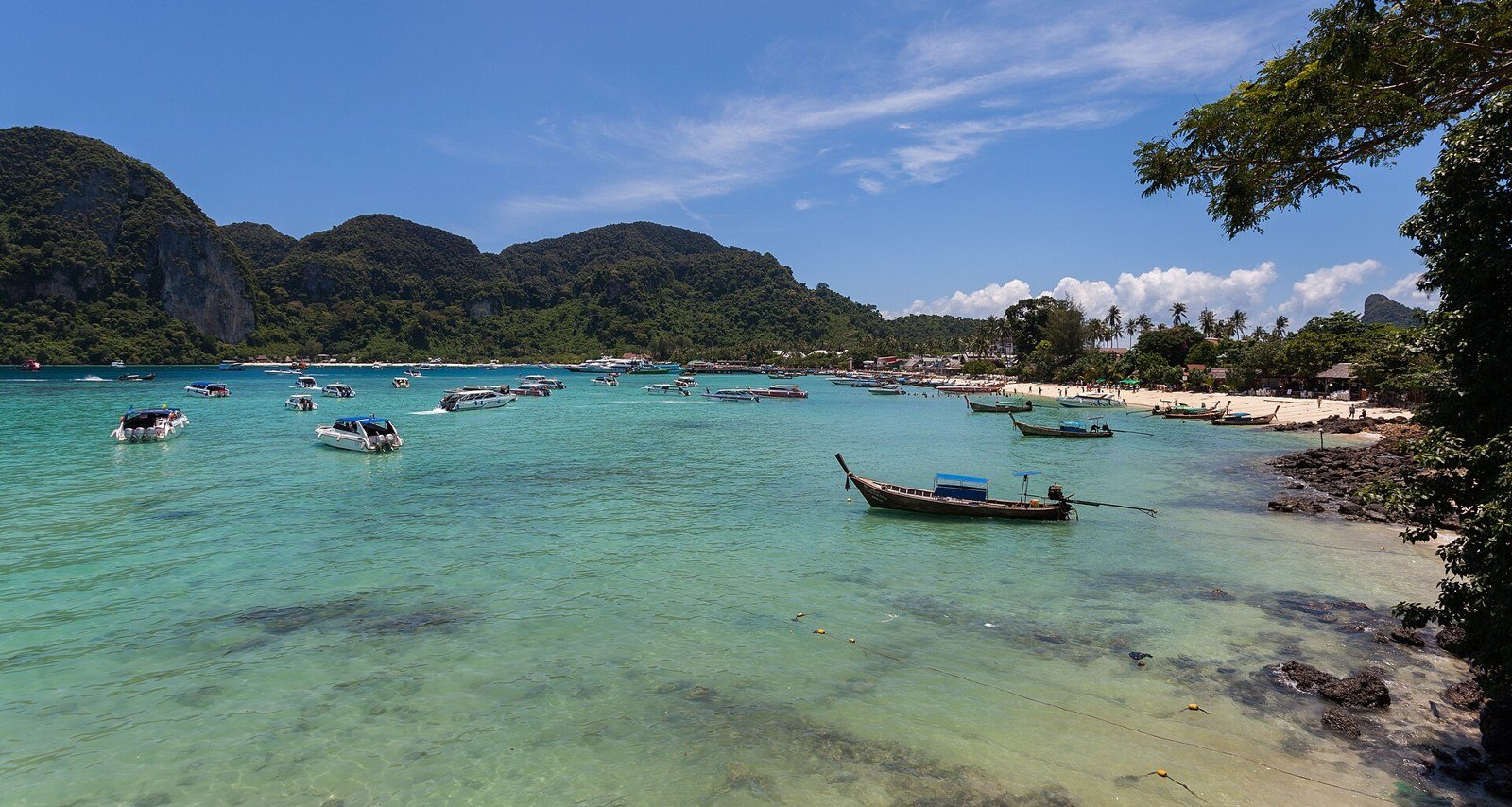
A ticket to Phi Phi does not necessarily deliver you to the beach where you have booked a room. Koh Phi Phi Don is the island with accommodation and the main arrival facilities; Phi Phi Le is a separate excursion destination. On Don itself, a stay around Tonsai and a stay at a northern resort can involve quite different arrival arrangements. Choose that setting before building the rest of the trip.
Keep Don and Le separate
The Tourism Authority of Thailand identifies Don as the main island for hotels, the pier, restaurants and visitor facilities. Its recognisable geography is the pair of bays at Tonsai and Loh Dalum, with the village between them. Phi Phi Le belongs to the same island group, but its name on a tour advertisement is not a hotel address on Don.
That distinction changes how to compare a day tour with an overnight visit. A mainland excursion follows the operator’s route and return sailing. Staying on Don gives you a base from which to organise island time and a separate boat outing. It does not make every stop around Phi Phi Le available whenever you choose. Protected-area rules and the operator’s approved itinerary still apply.
Tonsai is the practical village option
Tonsai Bay is the main port area, and TAT describes the village as a concentration of restaurants, shops, bars and other amenities. A room in this part of the island suits a traveller who values the arrival hub and a choice of places to eat. It also means choosing within an active village rather than assuming that every Phi Phi stay is a secluded beach retreat.
For a short stay, compare the actual room setting with the things you intend to do after dinner. Someone wanting evening activity and someone wanting an early night may choose differently within the same village. Read the individual property review for that distinction; a bay name alone cannot establish whether a bedroom faces a busy lane or a quieter part of the property.
Northern beaches change the arrival plan
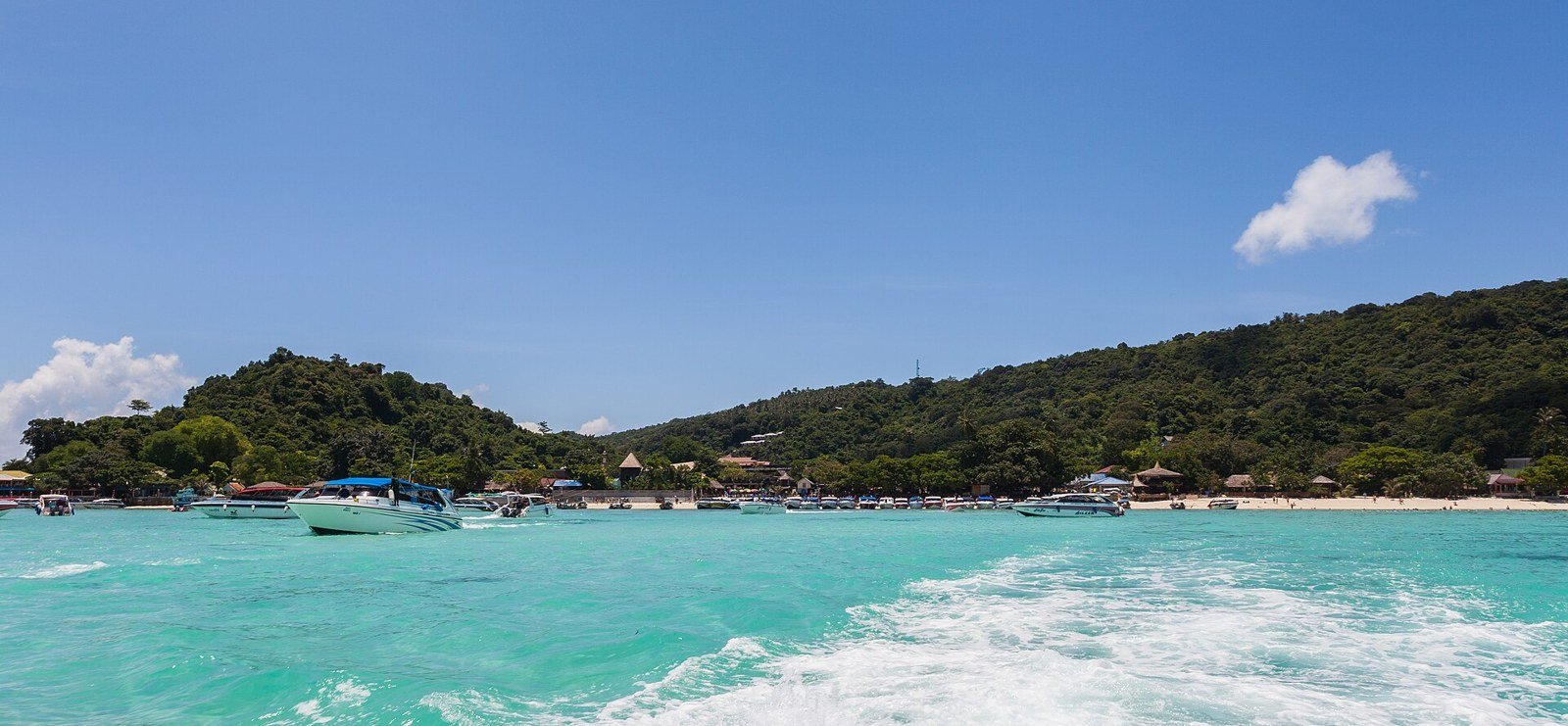
Laem Tong and Loh Ba Kao are other named parts of Don worth comparing with the village. The useful question is how a particular boat service reaches a particular resort. Andaman Wave Master lists Tonsai and Laem Tong as different destinations. Selecting the first result labelled “Phi Phi” without checking the landing can leave an additional transfer to organise.
SAii Phi Phi Island Village provides a concrete example at Loh Ba Kao. Its own arrival information says that passengers arriving on a public ferry at Tonsai need a separately arranged long-tail transfer to the resort. It also describes direct resort boat arrangements. These are that property’s options, not a promise of identical transfers for every northern hotel.
Choose the mainland pier as carefully as the island
Andaman Wave Master publishes services from Phuket’s Rassada Pier and from Krabi’s Khlong Jilad Pier. Resort-operated transfers may use different mainland facilities: SAii’s own Phuket service, for example, uses Royal Phuket Marina. A hotel transfer and a public ferry should therefore be compared as complete journeys, including the mainland meeting point.
Before fixing a flight connection, work backwards from the sailing’s check-in instructions and the transfer to the pier. This guide does not treat a published crossing duration as the total airport-to-room journey. Loading, the road section and an onward island boat can all be separate parts of the booking.
A workable first day on Don
For a village-based arrival, a sensible editorial plan is to settle in, get your bearings between the two bays, and decide whether you want a viewpoint outing or an unstructured beach afternoon. The viewpoint is a named attraction in TAT’s island listing, but this guide does not promise step-free access, a current admission price or a fixed walking time.
For a northern resort arrival, make the beach and immediate surroundings the first-day plan. Adding a return visit to Tonsai as soon as you arrive may introduce another boat arrangement before you have understood your base. Neither approach needs a long checklist of stops to justify an overnight stay.
Treat a Phi Phi Le outing as a separate booking
Decide what you want from the excursion: a particular protected-area stop, time on the water or a broader island circuit. Then check what the specific operator is allowed to provide for your date. A photograph of Maya Bay does not establish the landing arrangements, permitted activities or access on the day you travel.
Ask the operator which charges are included and which protected-area payments are separate. Do not assume that a hotel reservation, ferry ticket and island excursion all cover the same services. Keep any issued entry documentation with you when the operator or park instructions require it.
Weather affects the final landing too
TAT recommends November to April as the usual Phi Phi travel period, while the boat operator warns that schedules can change. A typical season is useful for choosing a holiday window, but it is not a sailing guarantee. Check the actual operator notice close to departure.
Arrival conditions can matter even after the crossing. SAii explains that tides may alter its beachfront arrival and that rough conditions can require another landing. The wider planning lesson is to confirm the final handover with your own accommodation, especially if that room is away from Tonsai. Leave the departure day free of an ambitious last excursion so the return connection remains the priority.
Sources & further reading
Sources checked on 28 October 2026. Specific opening, sailing and access details should be confirmed with the responsible operator.